Round Lake fishing conditions
Round Lake Fishing Report
Round Lake offers a good mix of late-summer options. Walleyes are the main target along bottom transitions and outside weed edges, while northern pike, largemouth bass, bluegills, crappies, and yellow perch can be found around vegetation, shade, and firm-bottom areas.
Water was around 70°F with 6–8 feet of visibility during the August 21 check. Start your walleye search along healthy weed edges and nearby gravel-to-sand or gravel-to-mud transitions. Use a minnow on a light jig. Panfish are holding close to vegetation, especially where green weeds meet open water.
Round Lake is small enough to check several types of cover without spending the day running. Build a short route that includes a windblown transition, a healthy weedline, shallow reeds or docks, and nearby timber or brush. Fish each area quietly, then repeat the combination of depth, cover, and wind that produces.
Species activity and tactics
Round Lake Fishing Report by Species
Use these depths as starting points and check the same cover a few feet shallower and deeper. A passing cloud, boat traffic, or a change in wind can move fish a short distance, so adjust before leaving a productive area.
Transition pattern
Round Lake Walleye Report
Begin along gravel-to-mud or gravel-to-sand changes in 14–20 feet. Check the upper side of the transition at dawn or dusk, under cloud cover, or with a light breeze, then follow the break toward deeper water as the sun gets higher. Focus on places where the contour bends, meets a point, or approaches vegetation.
A live-bait rig with a leech or minnow offers excellent depth control. Choose just enough weight to feel bottom without letting the line trail far behind the boat, and move slowly enough that the bait follows the contour naturally. Shorten the leader if fish are tight to the bottom or the turn is sharp. In calm water, a slip float can hold a leech or minnow just above fish without repeatedly dragging through soft bottom.
With a light wind, pitch a jig toward the shallow gravel and work it down to the mud or sand edge. Mark the point where the cast crossed the transition, not only the boat's position. If two passes show no bait or fish, move to the next turn in the break.
- Transition band: 14–20 feet where gravel gives way to mud or sand
- Calm-water option: Live-bait rig or slip float with a leech or minnow
- Wind option: Cast a jig and minnow through the upper edge of the transition
Vegetation and shade
Northern Pike and Largemouth Bass
Northern pike can use outside weed edges, inside turns, and pockets where cabbage or other submerged plants remain green. Work the openings and corners instead of tracing the entire weedline. Run a spoon or spinnerbait over the top, then swim a paddletail down the first open slot. Note whether strikes come from the top, corner, or base of the weeds.
For largemouth bass, begin with the darkest cover available: the underside of a dock, a pocket behind a reed point, a pad canopy, or wood touching deeper water. A surface bait can cover the gaps at first light. Once the sun creates sharper shade, skip a weightless worm underneath it or pitch a jig beside the cover.
If a pike follows without striking, pause the lure at the mouth of the pocket and then speed it up. If a bass only taps a moving bait, return from another angle with an unweighted plastic. Keep a bite-resistant leader, long-nose pliers, and the net ready before bringing a pike alongside.
- Pike route: Outside weeds, inside turns, and openings in healthy vegetation
- Largemouth targets: Dark dock gaps, reed corners, pad canopies, and wood touching depth
- No-strike change: Pause a jerkbait or slow a weedless plastic beside the target
Panfish and perch
Bluegills, Crappies, and Yellow Perch
Bluegills and other sunfish can gather along inside weed edges and protected openings in 6–9 feet. Suspend a small horizontal jig about 1 foot above the weed tops so the float does not pull the bait into the plants. If small fish take over, try a larger plastic or half crawler near the mouth of the pocket.
Crappies may hold around submerged timber, brush, or the deeper side of a weedline. Use side imaging or a slow approach to find the school before casting. A small minnow below a slip float works around defined cover, while a light jig and paddletail can be counted down above suspended fish. Avoid running directly over a compact school when the surface is calm.
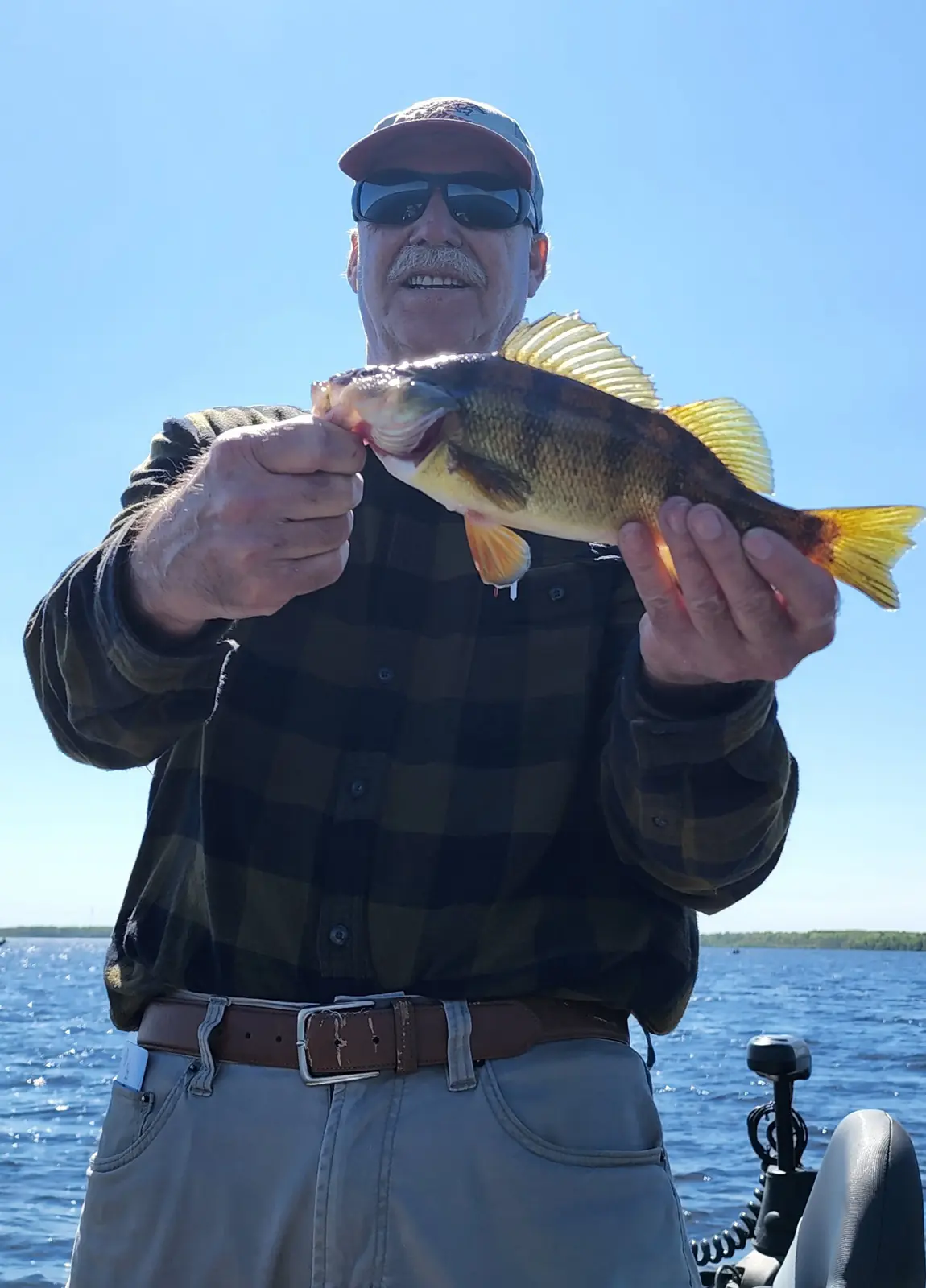
Yellow perch can use gravel points, small humps, and the lower edge of vegetation during midday. Check bottom with a minnow-tipped jig as the boat crosses from gravel into softer material. When perch appear, stop off to the side and cast back to the seam. Better fish may be tight to the first cabbage clump along that bottom change.
- Sunfish setup: Suspend a horizontal jig 1 foot above the weed tops in 6–9 feet
- Crappie clue: Look for crappies suspended beside timber or brush
- Perch route: Gravel points, small humps, and lower vegetation edges
Build a repeatable pattern
Round Lake Fishing Report: How to Catch Fish
Fish a quiet loop of transitions, weedlines, shallow cover, and timber. Revisit the best area after the light, wind, or boat traffic changes.
Build a Compact Four-Stop Route
Start with a wind-facing transition and continue to a nearby outside weedline. Then check shallow shade or cover. Finish at a point, small hump, or timber. Give each spot two passes from different angles and note the depth, bottom type, weed condition, bait, and direction of each bite.
Once one stop produces, look for the same combination elsewhere on the route. Matching the habitat and exposure is more reliable than assuming every gravel point or weedline will fish alike.
Keep the boat outside the cover and cast inward so the lure crosses the weed wall before reaching open water.
Keep the First Pass Quiet
Obvious spots often hold fish and attract other anglers. Approach calm-water targets at idle speed, stop outside the casting lane, and avoid crossing directly over shallow fish. Use longer casts, lighter weights, and natural retrieves before moving closer or trying a louder lure.
If another boat has just worked an obvious edge, test a secondary inside turn, isolated clump, or the deeper side of the same feature. The fish may have shifted only a short distance rather than leaving the area.
Use lure height to separate species around the same vegetation. A spoon or spinnerbait over the cabbage can draw pike, while a jig near the lower edge can reach walleyes or perch. A float beside a protected opening gives bluegills and crappies a slower target. If the weeds look brown or broken, follow the edge until living plants meet sand or firmer bottom.
Use Short Rechecks Instead of Long Circles
Try one different bait, move to another cover type, and return after the light, wind, or boat traffic changes.
Keep a waypoint when the screen shows fish or bait, even if the first presentation fails. Remove marks that show neither forage nor useful cover so you do not waste time returning to empty water.
Keep working an area when you see bait, fresh fish marks, or healthy cover. After repeated passes with no forage or bites, move to a nearby turn with the same depth and cover.
Conditions and outlook
Round Lake Fishing Report: Conditions and Outlook
Round Lake responds quickly to light, wind, healthy vegetation, and fishing pressure. Check the live weather, then adjust the route as conditions change through the day.
Low Light and Windblown Transitions
At dawn or dusk, under cloud cover, or with a light breeze, walleyes and predators may move toward the upper edge of a gravel, mud, or sand transition. Begin shallower than the midday starting lane and use a jig, float, topwater, or shallow-running bait before following fish toward the lower edge.
If one direction produces, repeat it. Even a light wind can position bait along one side of a small feature.
Midday Weedline Control
After the morning transition bite, compare plant texture rather than depth alone. Crisp stalks that snap free, a defined lakeward wall, and minnows flashing inside a pocket make a better midday target than a vast but collapsing bed. Hold the boat on the open-water side and pitch into individual notches.
Brown fragments on the hook or floating uprooted stems mean the bed is deteriorating. If one bed is declining, check the next pocket, a shaded dock, or the gravel seam touching that vegetation.
Pressure, Shade, and Secondary Cover
Boat traffic can move fish off a visible dock, point, or shallow edge. Work the shaded side first, then check the closest deeper weedline or bottom change. Crappies may settle beside timber, while bass and pike may use isolated cover overlooked by a quick shoreline pass.
Revisit a promising area when the light or traffic changes.